
The origins and architectural vision of Gallura
Gallura is one of the most extraordinary examples of contemporary Mediterranean architecture, born of an innovative vision that was able to turn an unspoilt territory into a timeless architectural dream. The genesis of this innovative architectural project dates back to 1962, when Prince Karim Aga Khan IV founded the Consortium with the aim of creating an elite tourist destination that would respect and enhance the natural landscape of north-eastern Sardinia.
The Aga Khan, with extraordinary foresight, sensed the potential of this wild coast and brought to life an unprecedented architectural project based on principles of sustainability well before the term existed, and on integration with the environment. His vision was not simply to build luxury resorts, but to create a harmonious architectural ecosystem in dialogue with the surrounding nature.
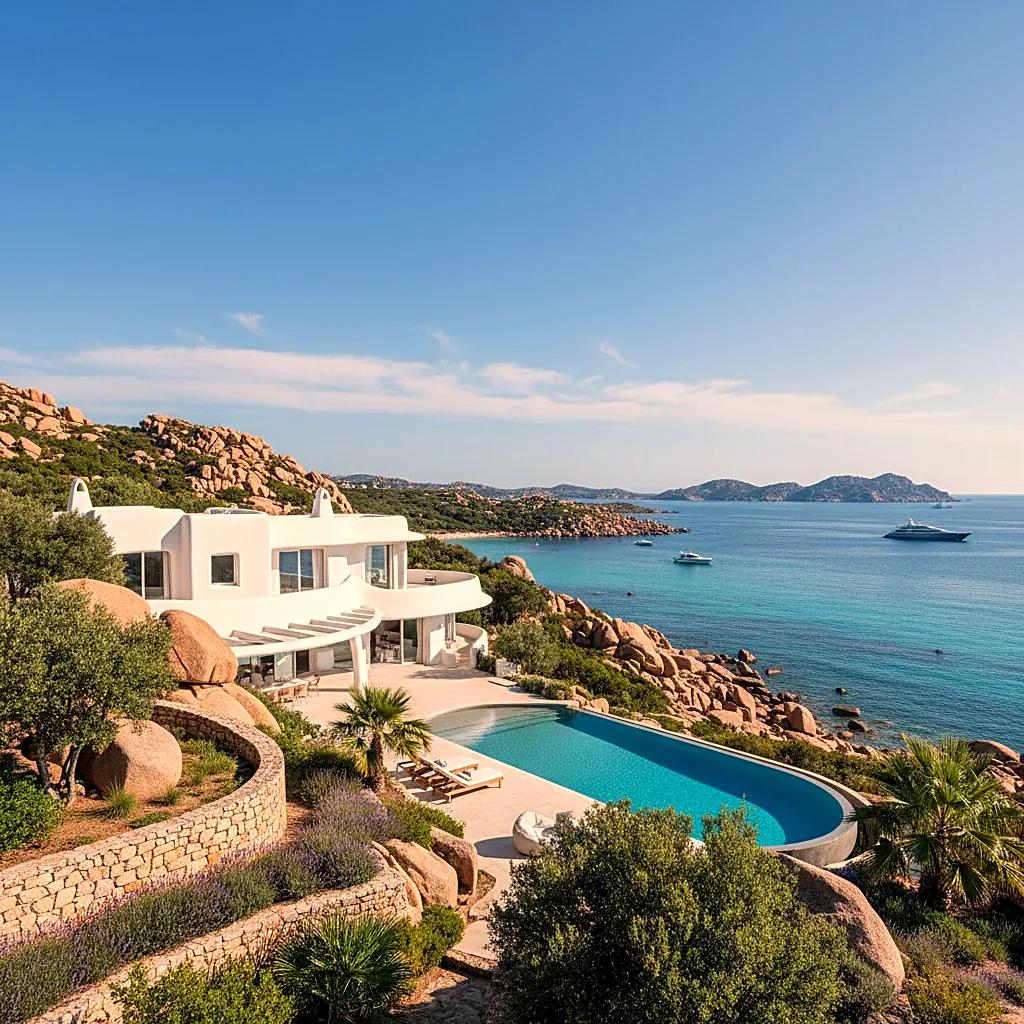
The Mediterranean elegance that marks the architecture of Gallura finds in white its unifying element.
The architectural picture that emerged is unique in the Mediterranean, marked by a design approach able to bring together local tradition and international innovation. From the very beginning the Consortium laid down strict rules for building, requiring the use of local materials, soft colours and gentle lines that would blend perfectly into the landscape.
The visionary architects: Busiri Vici and Couëlle
The success of Gallura as a model of innovative architecture owes much to the contribution of two key figures: Michele Busiri Vici and Jacques Couëlle. These visionary architects shaped the aesthetic identity of the coast through complementary but distinct approaches, creating iconic projects that defined the region's unique and eclectic architectural style.
Jacques Couëlle, a French architect of Italian origin, brought his philosophy of organic architecture to northern Sardinia. His creations, often described as "villa-sculptures", seem to emerge naturally from the ground as extensions of the rock and the vegetation. Couëlle conceived buildings not as structures imposed on the landscape but as elements born of a dialogue with their surroundings. His most iconic works, such as Villa Le Grotte, are marked by fluid, sinuous forms that recall the natural caves of the coast, with interiors that unfold in an apparently random way but are in fact carefully studied to make the most of the relationship with nature.
Michele Busiri Vici, by contrast, represented the more rational and geometric soul of the project. A Roman architect of great standing, Busiri Vici brought to northern Sardinia a refined Mediterranean sensibility, based on a careful study of local materials and on a design approach that balanced formal rigour with adaptation to the setting. His projects, such as the celebrated Hotel Cala di Volpe, show a mastery in the use of Gallura granite and juniper wood, combined in architectural compositions that, while keeping a clear geometric order, blend perfectly into the landscape.
The unique and eclectic architectural style that marks Gallura is born precisely of the synthesis of these two approaches: Couëlle's sculptural organicism and Busiri Vici's Mediterranean rationality. Together they created an architectural language that became instantly recognisable and that continues to influence new generations of designers.
The element of white in the architecture of the coast
White is the dominant and most characteristic colour of Gallura's architecture, taking on a role that goes far beyond a simple aesthetic choice to become the symbol of an entire design philosophy. This white, which locals affectionately call "Mediterranean white", is not a neutral or clinical white but a warm, vibrant tone that reflects the Mediterranean light in a way all its own.
White as a symbol of purity and elegance finds its fullest expression in northern Sardinia. This colour, chosen for all the Consortium's buildings, embodies the wish to create an architecture that breaks away from the heaviness of traditional stone construction, proposing instead an idea of lightness and transparency. White thus becomes a metaphor for an approach to life based on simplicity and on the essential — values that mark the Mediterranean way of living in its most refined sense.
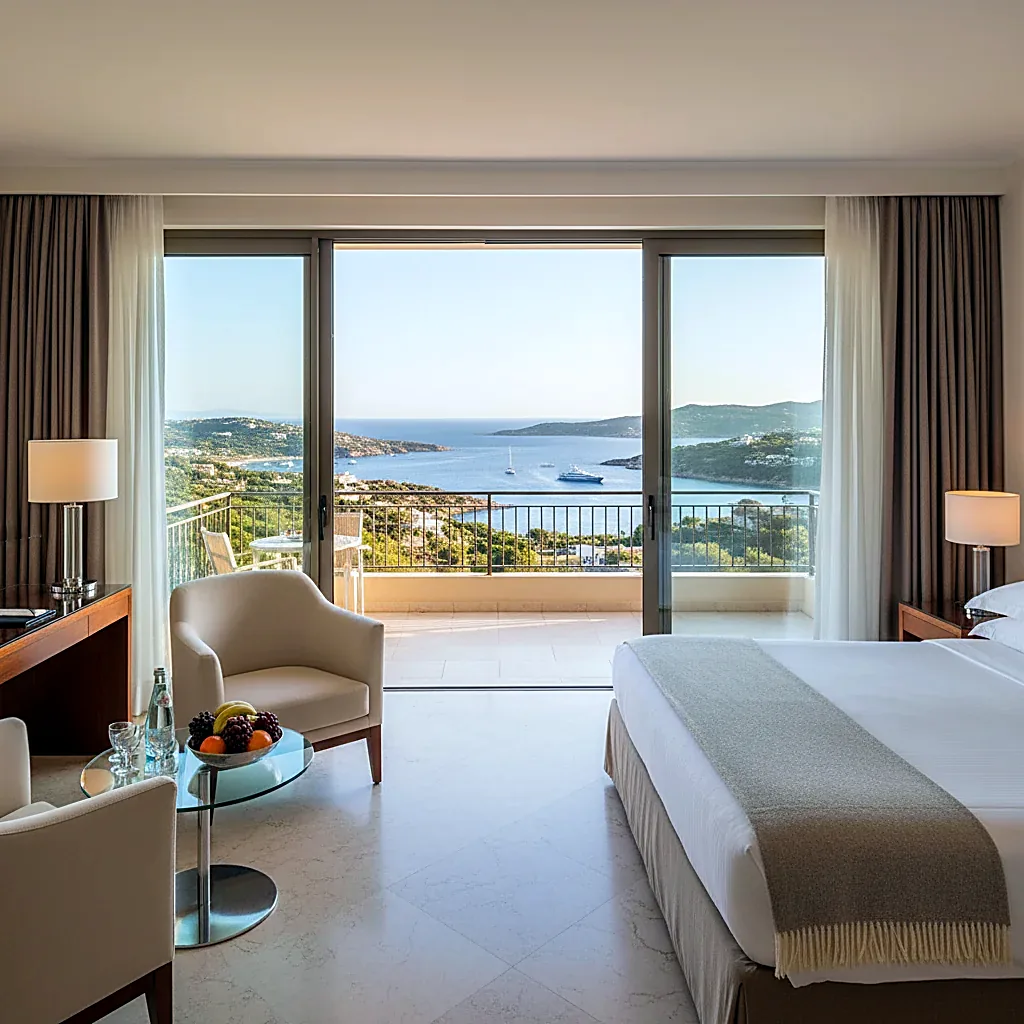
The visual expansion of space through the use of white is one of the most interesting aspects of the architecture of this coast. White surfaces are able to reflect light in a diffuse way, creating interiors that appear larger and brighter. This effect matters especially in a setting such as Gallura, where buildings often stand on sites of great scenic beauty and where the relationship between inside and outside must be made the most of.
The Mediterranean elegance that marks the architecture of Gallura finds in white its unifying element. This colour allows a harmonious dialogue between the buildings and the surrounding landscape, never imposing itself but rather leading the eye towards the sea and the vegetation. White thus becomes the colour of mediation, the one that allows architecture to exist without overwhelming nature.
The symbolism and the function of the colour
The choice of white in the architecture of Gallura has a double value, symbolic and functional, that deserves closer attention. Symbolically, white stands for purity, light and spirituality, values that sit perfectly with the idea of a return to nature and of an authentic way of living. In an age of growing industrialisation and pollution, the white of these coastal buildings becomes the symbol of a possible alternative, founded on respect for the environment and on the pursuit of beauty.
The aesthetic effect of white is closely bound to its ability to interact with Mediterranean light. Unlike in other climates, in northern Sardinia white does not create glare but rather a diffuse and pleasing brightness. This is possible thanks to the particular quality of Sardinian light, which has a bluish component that tempers the intensity of the reflections.
The influence on the perception of space is one of the most interesting aspects of the use of white in the architecture of this coast. White surfaces tend to "recede" visually, creating the impression of wider, airier spaces. This effect matters especially indoors, where the white of walls and ceilings allows furnishings and works of art to stand out, creating rooms that, for all their detail, keep a sense of lightness and order.
Functionally, white has thermal properties particularly suited to the Mediterranean climate. Its high reflectance reduces the absorption of heat, helping to keep interiors cooler during the summer months. This feature, together with the correct orientation of the buildings and natural ventilation, is an example of applied bioclimatic design that anticipates modern sustainable architecture by decades.
Integration with the landscape and with nature
The architecture of Gallura is an exemplary model of integration with the landscape, in which buildings do not impose themselves on the land but rather accompany it and bring it out. This approach, revolutionary for the time in which it was conceived, rests on principles we would today call environmental sustainability and respect for context.
The use of local materials is the first and most important element of this integration. Gallura granite, juniper, chestnut and oak from Sardinian forests, terracotta made with local clays: every material is chosen not only for its aesthetic and functional qualities but also for its ability to "age well" in that specific environment. Local materials have chemical and physical characteristics that make them particularly resistant to the area's climate, ensuring durability and minimal maintenance costs.
The organic, flowing design that marks much of Gallura's architecture is another fundamental strategy of integration. The buildings do not follow rigid Euclidean geometries but adapt to the shape of the ground, following the contour lines and respecting the existing vegetation. This approach, particularly evident in the work of Jacques Couëlle, creates a continuous dialogue between architecture and nature, in which the boundaries between built and unbuilt become blurred and permeable.
The balance between building and nature is pursued through carefully studied design choices. Buildings are often partly set into the ground or carved into the rock, reducing their visual impact and improving their thermal performance. Green roofs, roof gardens and climbing plants help to blend the buildings into the landscape, creating an effect of continuity between architecture and the natural environment.
Traditional materials and innovation
The choice and the combination of materials in Gallura's architecture is a perfect example of how tradition and innovation can live together in harmony. Traditional materials such as chestnut wood, granite and terracotta are not used uncritically or nostalgically, but reinterpreted in the light of contemporary needs and of the new technologies available.
Chestnut wood, for example, is used not only for window frames and floors but also for innovative structural elements that combine the tradition of hand-carving with digital fabrication techniques. Local master carpenters, keepers of an ancient craft, work with designers and engineers to create solutions that unite aesthetic beauty with advanced technical performance.
Gallura granite, the material par excellence of the region, is worked with technologies that bring out its natural qualities while keeping the link with tradition. New cutting techniques make it possible to obtain thin slabs that can be used as lightweight cladding, while traditional split finishes are preserved for the most visible and characterful elements.
The technology hidden within traditional designs is one of the most interesting aspects of the contemporary architecture of this coast. Natural climate control, rainwater harvesting, advanced insulation and integrated photovoltaic systems are inserted discreetly inside structures that outwardly keep a traditional appearance in keeping with their setting.
This integration of advanced technology with traditional materials makes it possible to reach very high standards of comfort and energy efficiency without compromising the architectural identity of the place. The villas and hotels of Gallura are thus pioneering examples of sustainable architecture, in which technological innovation and respect for tradition merge into a single expressive language.
Socio-economic and cultural impact
The development of Gallura has generated a socio-economic impact of extraordinary proportions, radically transforming not only the Gallura region but the whole economy of north-eastern Sardinia. The model of tourist development put in place by the Consortium has created a unique economic ecosystem, founded on the top end of the market and on the quality of its services.
The tourist development and the economic impact of Gallura reach record figures, with the northern Sardinia group recording significant turnover in the hotel and property sectors. The presence of thousands of superyachts along the coast generates an economic impact estimated in the millions of euros a day during the high season, with large vessels producing considerable daily economic benefits per boat.
The criticisms and the question of sustainability are, however, the other side of this economic success. Although a significant part of the consortium's 3,000 hectares in northern Sardinia is kept "green", environmental sustainability is put to the test by overtourism, by the intensive use of resources and by direct and indirect environmental impacts. Building and the environment are a critical knot, with tourist development often associated with cases of unchecked construction and with the perception that the environment has been compromised.
Overtourism and social pressure during the peak season generate overcrowding, rising prices for essential goods and services, congested public transport and tensions with residents. Economic polarisation is another difficulty: the top-end model attracts elite tourism but risks accentuating inequality and limiting the spread of its benefits across the area.
Future prospects and sustainability
Trends in sustainable development are gradually changing the approach to land-use planning in Gallura. The shift towards digitalisation is seen as an opportunity to make the destination smarter, more sustainable and less dependent on seasonal flows of luxury, promoting authentic experiences and diversifying the type of visitor.
The prospects for Gallura's architecture are turning more and more towards bioclimatic solutions and energy-saving technology. New projects keep their exclusive character and strong local identity but are conceived for the greatest possible sustainability: advanced insulation, zero energy consumption, rainwater harvesting, functional design without giving up beauty.
International investment is financing the refurbishment of iconic hotels and introducing new "lifestyle" concepts, but these strategies remain under observation as regards the balance between financial return and the protection of the land. Local institutions and stakeholders are called upon to plan in a more integrated way, not least in view of the opening of new university faculties and innovation hubs, in order to push towards more resilient and sustainable models of development.
The sustainable future of Gallura will depend on the ability to combine a vocation for outstanding tourism with a more balanced management of resources and greater attention to the social impact across the whole area. Architectural development will have to continue to draw on the original principles of integration with the landscape, updating them with the most advanced technology and with a renewed environmental sensibility.
FAQ
What is the secret architecture of Mediterranean white?
The secret architecture of Mediterranean white refers to the use of invisible elements and advanced technology perfectly integrated with the natural environment. This architectural approach stands for discretion and intelligent luxury, where technological innovation remains hidden inside structures that outwardly keep a traditional appearance in keeping with the landscape.
Who conceived the Gallura project?
The Gallura project was promoted by Prince Karim Aga Khan IV, who in 1962 founded the Consortium with the aim of creating an elite tourist destination that would respect and bring out the natural landscape of north-eastern Sardinia.